“How much does it cost to develop?” is the first question most people ask — and the honest answer is that it depends on the site, the scheme and the market. But every residential development shares the same cost building blocks. Understanding them is the first step to a realistic budget.
The main cost buckets
- Land & acquisition — the purchase price, plus stamp duty, legals and due diligence.
- Construction — the build itself (usually the largest single cost), plus site works, demolition and landscaping.
- Professional fees & approvals — design, planning, engineering, surveying, certification and council contributions.
- Finance & holding costs — interest, fees, rates and outgoings across the project timeline.
- Selling costs — agent fees and marketing on completion.
- Contingency — a buffer for the unexpected. Never optional.
The costs people forget
Margins get eaten by the line items nobody budgeted for: holding costs when a project runs long, developer contributions, service upgrades, and GST (which, with the margin scheme, needs your accountant's input). A realistic budget accounts for these from day one.
Why conservative assumptions win
It's tempting to use best-case build costs and optimistic sale prices. Experienced developers do the opposite — conservative costs, realistic end values, and a genuine contingency. It's the difference between a project that delivers and one that disappoints.
How we model it
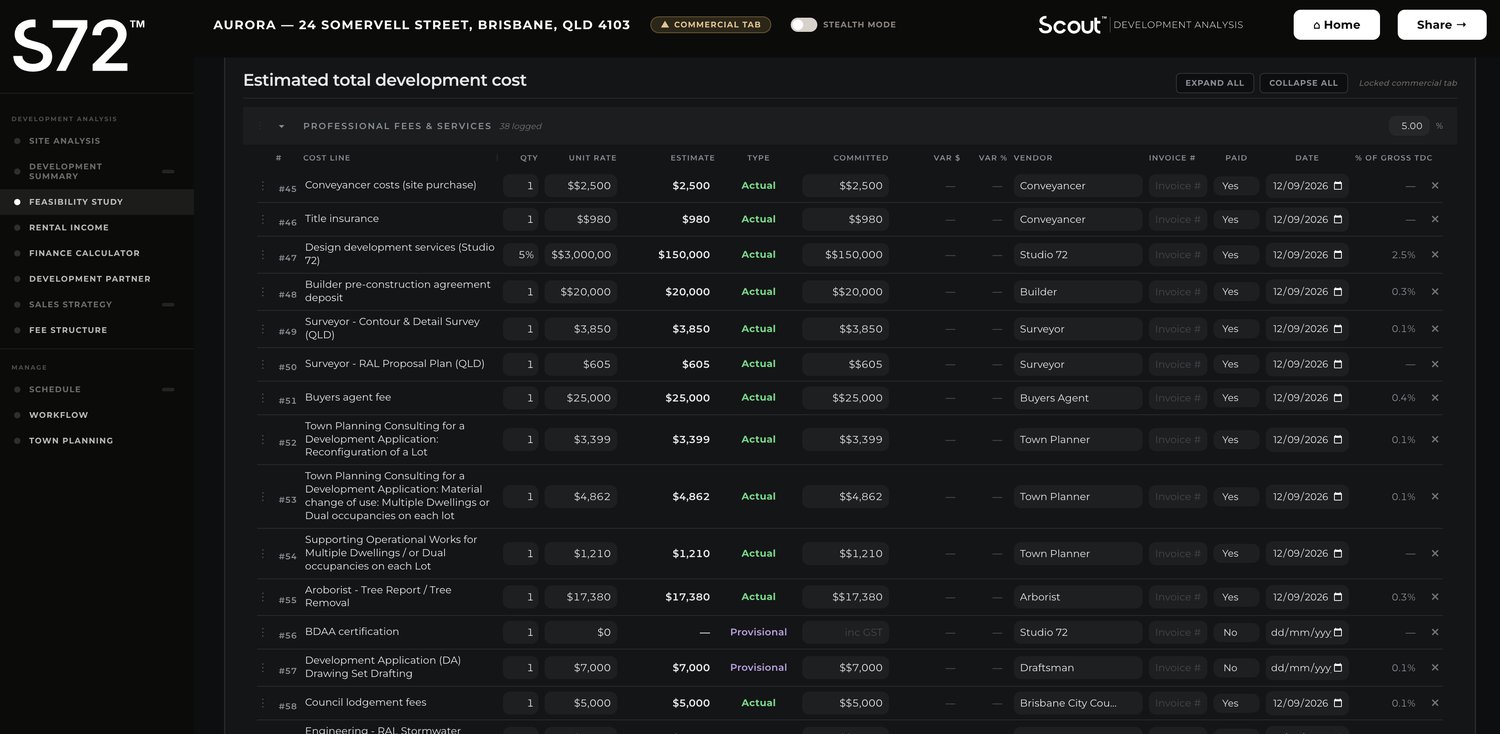
Every Studio 72 project is costed line by line in Scout™ — estimates against actuals, provisional against committed — so the budget is live, transparent and under control from feasibility through to completion. You always know where the numbers stand.
Frequently asked questions
What are the main costs in a development?
Land and acquisition, construction, professional fees and approvals, finance and holding costs, selling costs, and a contingency buffer.
What costs do people most often forget?
Holding costs when a project runs long, developer contributions, service upgrades, and GST — which, with the margin scheme, needs your accountant's input.
How do you keep a development on budget?
We cost every line item in Scout — estimate against actual, provisional against committed — so the budget stays live and under control throughout.
This article is general information only and does not constitute planning, legal or financial advice. Every site is different — seek advice specific to your property.